

ESB: Delivering today, for future us
20th July 2026
Powering change: How daa is accelerating decarbonisation at our airports
20th July 2026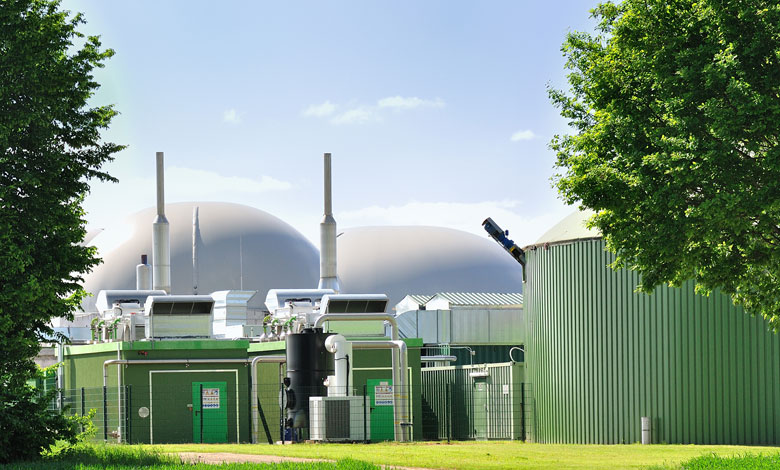
Guarantees of Origin (GOs) were introduced under EU law to improve transparency and allow consumers to understand where their energy comes from.
Renewable Gas Guarantees of Origin (gGOs) apply this framework to gas, using certificates to show how much of a supplier’s energy mix comes from renewable sources. In Ireland, this system was introduced under regulations in 2022.
Each certificate represents one megawatt-hour (MWh) of renewable gas, typically biomethane, produced and injected into the gas network.
As gas flows through an interconnected system, these renewable molecules cannot be physically traced to individual consumers. Instead, gGOs operate through a “book-and-claim” model, allowing the renewable attribute of gas to be tracked and traded independently of physical delivery.
In Ireland, Gas Networks Ireland (GNI) acts as the issuing body and will operate a central electronic registry under a supervisory framework established by the Commission for Regulation of Utilities (CRU). This framework governs the issuance, transfer, cancellation and use of gGOs, and underpins how suppliers substantiate renewable claims.
Learning from electricity guarantees of origin
The gGO framework builds on a similar system already established in electricity markets across Europe.
Electricity GOs support fuel mix disclosure and can be traded across the EU. While this flexibility supports renewable investment, it has also led to confusion where “renewable” is understood as a physical reality rather than an accounting outcome.
This distinction is becoming increasingly relevant in Ireland as certificate-backed green tariffs become more common in both electricity and gas markets.
How the Irish gGO Framework operates
The CRU’s 2026 decision establishes how Ireland’s gGO system operates, including how certificates are issued, traded and used.
All gGOs will be managed through a central registry operated by GNI. Producers, suppliers and traders can hold accounts within this registry and transfer certificates between them.
Producers generate renewable gas and are issued certificates. Suppliers and traders can hold and transfer certificates. While only suppliers are permitted to cancel certificates.
Cancellation is a critical step. A certificate only supports a renewable claim once it has been cancelled, ensuring it cannot be reused or double counted. This aligns the system with Fuel Mix Disclosure requirements and is central to consumer-facing reporting.
Certificates will be issued monthly and can be traded across EU markets. Given Ireland’s currently limited domestic biomethane production, suppliers are likely to rely — at least in the near term — on imported certificates to meet demand for renewable gas products.
“Renewable Gas Guarantees of Origin represent a key development in Ireland’s energy transition, providing a structured and standardised way to track renewable gas across an EU-wide system.”
Ensuring credibility: Sustainability and verification
Renewable gas must meet EU sustainability criteria before a certificate can be issued.
Compliance is verified through recognised EU voluntary certification schemes, which confirm that fuels such as biomethane or renewable hydrogen meet required environmental standards.
These requirements apply to domestic production and, over time, are expected to extend to imported certificates as EU legislation continues to be implemented across Member States. Together, these measures are intended to ensure traceability and reduce the risk of fraud.
What gGOs mean for consumers
For consumers, gGOs provide a way to choose gas products based on environmental attributes. In practice, they underpin the growing number of “green gas” tariffs available in the Irish market.
However, the distinction between certificates and physical supply remains central. A household purchasing renewable gas is not directly receiving renewable gas. Instead, the purchase ensures that an equivalent amount of renewable gas has been produced elsewhere within the European system.
For example, a consumer in Ireland may purchase a green gas product, while the physical biomethane associated with that certificate is produced and consumed in another Member State. The consumer’s purchase supports renewable production, but not necessarily within the Irish gas network.
This gap between perception and reality is one of the defining challenges of certificate based energy markets. While the system provides transparency and traceability at a market level, it can be misunderstood at the consumer level.
It is also important to note that gGOs do not contribute to Ireland’s renewable energy targets or sectoral emissions ceilings, which are based on physical production and consumption rather than certificate trading.
Key challenges and ongoing debate
While gGOs improve transparency, they also raise a number of challenges.
Consumer understanding remains a key issue. Experience in electricity markets suggests that many consumers interpret “100% renewable” claims as a reflection of physical supply rather than a certificate-based accounting mechanism.
Concerns around greenwashing have also emerged, particularly where suppliers continue to rely on fossil gas while using certificates to support renewable branding. Critics argue that this can weaken the link between environmental claims and actual emissions reductions.
However, it is important to distinguish between the design and perception of the system.
The CRU framework is primarily intended to ensure traceability, accurate accounting and protection against fraud. It is not, in itself, a policy mechanism designed to deliver emissions reductions.
While certificate sales can provide an additional revenue stream for renewable gas producers, there is limited evidence that certificate markets alone are sufficient to drive large-scale investment. As a result, policy attention is increasingly focused on complementary measures, including direct supports and longer-term contracting arrangements.
Future developments
The rollout of gGOs represents an important expansion of Ireland’s renewable energy certification framework.
At EU level, the post-2030 renewable energy framework is expected to place greater emphasis on consistent approaches to tracking energy origin and emissions across sectors. As renewable gases and hydrogen develop alongside electricity markets, certification systems such as Guarantees of Origin are likely to come under increased scrutiny.
Recent developments also highlight the constraints of EU market rules. In March 2026, the European Commission issued a Detailed Opinion on Ireland’s proposed Renewable Heat Obligation, rejecting a mechanism that would have provided additional certificate value to domestically produced biomethane on the basis that it would distort the internal market.
Looking ahead, Guarantees of Origin are expected to expand into heating and cooling, and further EU reforms may strengthen the relationship between certificates and physical energy flows. Clear communication will remain essential as the framework evolves.
From Framework to implementation
Renewable Gas Guarantees of Origin represent a key development in Ireland’s energy transition, providing a structured and standardised way to track renewable gas across an EU-wide system.
The CRU’s Supervisory Framework establishes clear rules for the issuance, trading and verification of certificates, while Gas Networks Ireland is responsible for operational implementation through the national registry.
The next phase will focus on how the system functions in practice. Further regulatory detail is expected in areas such as Fuel Mix Disclosure and the verification of green gas products, which will shape how renewable claims are presented to consumers.
Ultimately, the effectiveness of the framework will depend not only on its design, but on how it is understood. As the renewable gas market develops, the key challenge will be ensuring that certificate-based claims remain clear and credible in practice.
Phil Hemmingway, Director of Decarbonisation
W: www.cru.ie
 Ossian Smyth TD
 Florika Fink-Hooijer
 Antoine Oger
 Laura Curtis-Moss
 Anthony Costello
 Niall Ó Donnchú
 Mike Savage
 Brian Carroll
 Oisín Coghlan
 Stephen Onakuse
 Kevin O’Sullivan
 Hendrik W van der Kamp
 Philip Nugent
 Adrian Smyth
 Ainhoa Gonzalez Del Campo
 Geoff Doole
 Clare Pillman
 David Greenfield
 Danielle Conaghan
 Peter McEvoy
 Triona McGrath
 J Owen Lewis
 Gavin Smith
 Imelda Hurley
 Lucy Gaffney
 Dr Venkatesh Kannan
 Kevin Hegarty
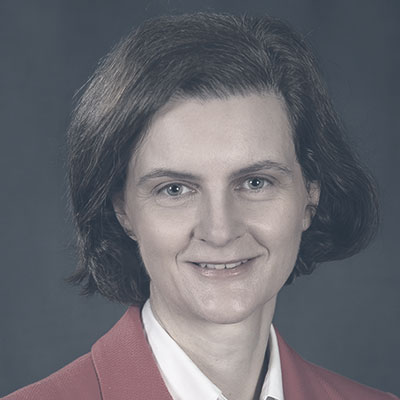 Eimear Cotter
 Aditya Arora
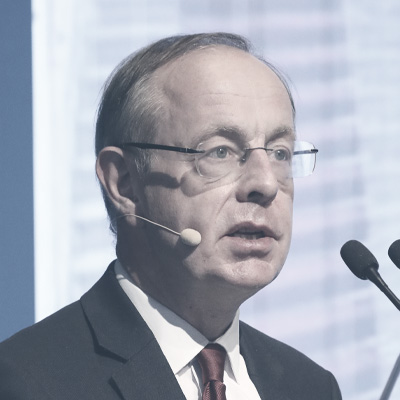 Patric Child
 Eleanor Roche
 Andy Bleasdale
 Andrew Muir MLA
 Chris Hewitt
 Francesca Racioppi
 Danielle Conaghan
 Christopher Hammond
 Laura Díaz Anadón
 Lorna McAdoo
 Conor Murphy
 Mark Horton
 Niall McLoughlin
 Susan Hegarty
 Zoe Kavanagh
 Niall Ó Donnchú
 Venkatesh Kannan
 David McGee
 Anna Rose
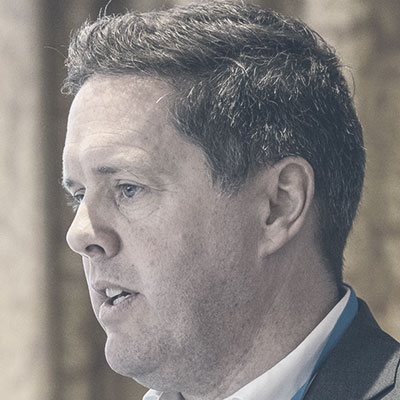 Paul Hogan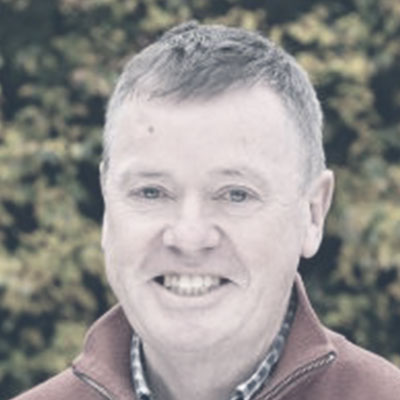



















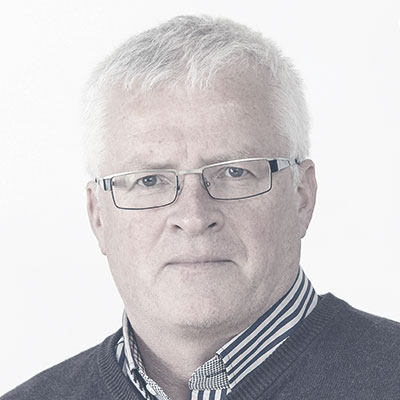

 Levent Ergin
 Veronica Manfredi
 Francis Finnerty
  Timmy Dooley TD
  Julie Thompson
  Mark Thuillier
  Martin Hutchings
  Mark Nolan
  Ian Marnane
 Tom Pickerell
 Caroline Kuzemko
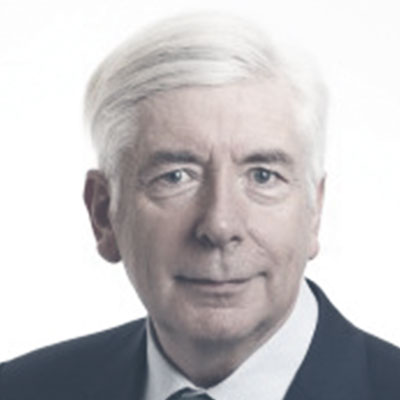 Alex White
 Dr Lizzy Pinkerton
  Dr. Lisa McNamee
  Denise Cahill
 Claragh Mulhern
 Sophie Reynolds
 Eva Maria Bille
  Jacinta Conway
  Joe Duignan
 Maria Fitzpatrick
 Martina Hennessy
  Noel Meehan
 Enda Murphy
  Barry O’Loughlin
 Paul O’Neill
 Irene Rondini
 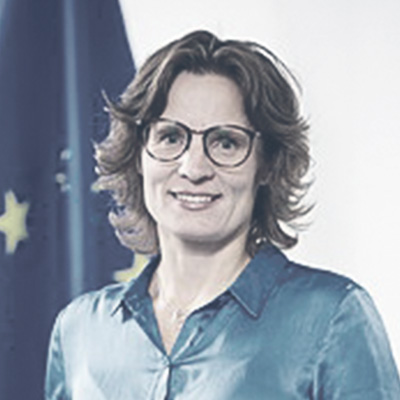 Jessika Roswall
 Fiona Simpson
 Anne Goggin
  Catherine Vilquin
  Conall Boland
 Colin O’Hehir
 Janet Lynch
 Sara Lynch
 Maria Kelly
 Deborah Spence
 Juan Pablo Martinez
 Valentina Tarasco