

A circular Ireland
20th July 2026
Gas Networks Ireland advances decarbonisation with €200 million upgrade of compressor stations
20th July 2026
Ireland enters its EU Presidency at a moment of inflection. Across Europe, circularity is now recognised for its potential to drive competitiveness, resilience, and strategic autonomy.
The Circular Economy Act, the Industrial Acceleration agenda, and tightening EU product rules are not incremental developments — they point to a fundamental shift in how value is and will be created and captured across Europe.
For Ireland, the question is no longer whether circularity matters. It is whether our industrial base can move fast enough, enabled by public sector leadership, to shape this emerging industrial system — or adapt to how it is defined elsewhere.
During Ireland’s watch the EU Circular Economy Act will be published hopefully taking on board calls to not only establish a robust single market for secondary raw materials and lay the foundations to develop a single market for value-retention operators but also to drive greater reuse, repair, refurbishment and remanufacturing (EFFRA, 2026).
Linear advantage is eroding and innovation is not the constraint
The strengths of the linear model — scale, simplicity, cost efficiencies — are weakening – with companies and countries exposed to resource volatility, security of supply issues – driven by rising geopolitical instability – and regulators increasingly driving product accountability upstream.
Ireland does not lack circular innovation. We have pilots. We have proof points. We have early adopters. What we do not yet have is sufficient deployment at scale and viable markets for circular products and services.
Emerging circular solutions continue to collide with systems built for linear throughput—procurement rules, infrastructure, pricing models. The result is solutions that work in isolation but still struggle to take hold as commercially viable propositions in the market.
We need to continue to push the boundaries by leveraging advanced technologies to deploy circularity: accelerating progress now depends on alignment across value chains and markets.
Tipping points and shifting competitiveness drivers
Circularity opportunities exist within and between organisations, value chains and sectors. Very few companies can be circular on their own.
Circular transitions in sectors will not be gradual but move through inflection points related to changing product-level requirements (e.g. ESPR, DPP and EU Product Act); data and traceability infrastructure maturity; viable business models and capital alignment.
When these align, change will accelerate. The risk is not moving too early, rather it is being caught when the shift happens, and being forced to follow.
Competitiveness therefore is no longer just about internal efficiency – but about an organisation’s position within circular systems. Ireland is deeply embedded in global value chains. That is both a vulnerability and an opportunity.
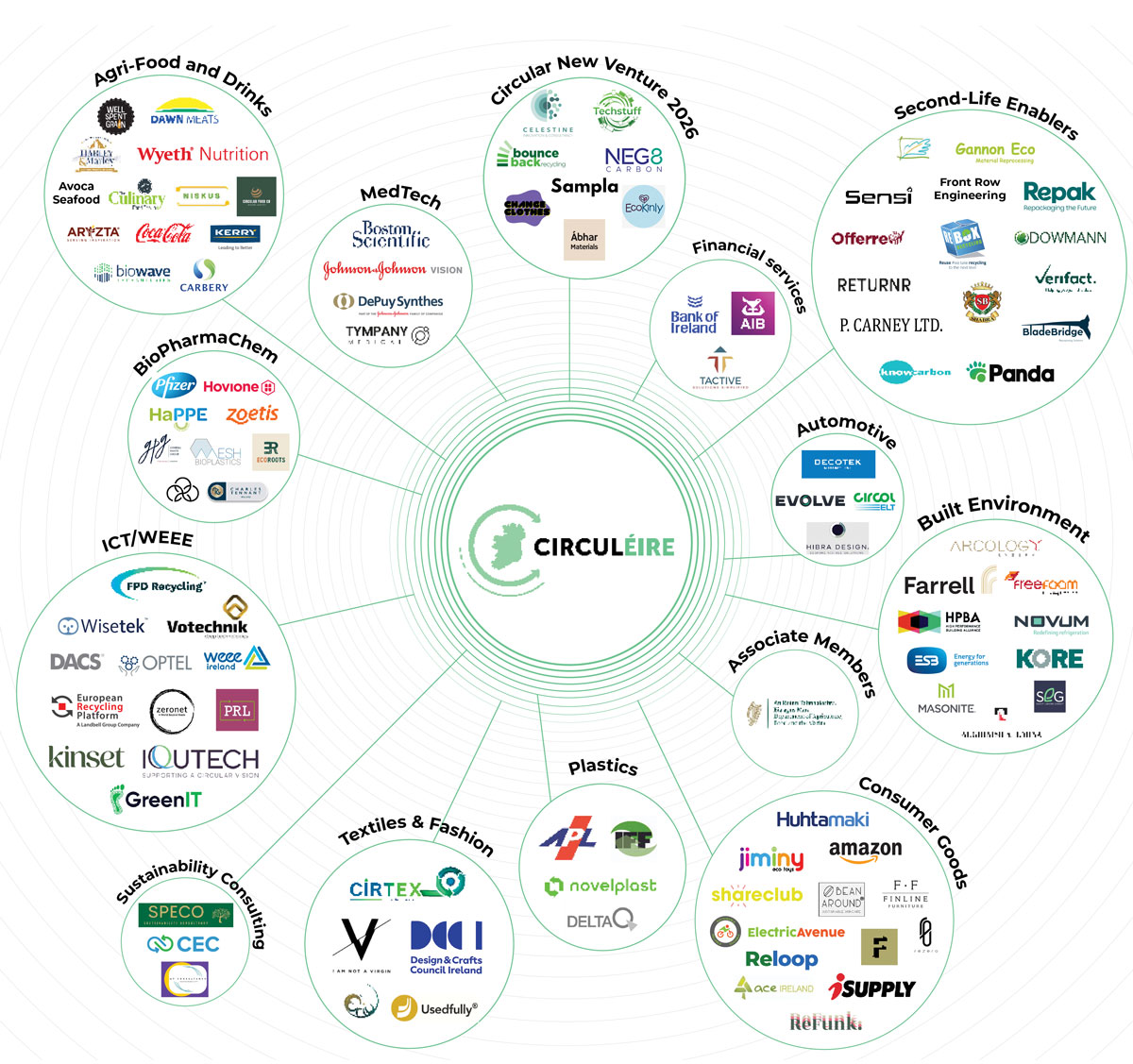
The choice for enterprise is becoming clear: remain a participant in linear systems under pressure or prioritise being fit for the future and actively orchestrate circular value chains.
Design, data and innovation for investability
Design determines product, component and material life-extension possibilities. Data enables reuse, repair and remanufacturing. Circular business models are becoming data-dependent by design. What is in the product, where it has been, what value remains… As digital product passports emerge, a new industrial layer is forming which will determine who has visibility, who can act, and who captures value.
Ireland has a clear advantage in digital. But it must be aligned with circular strategy and deployed through applied Research, Development & Innovation (RD&I) as real, working solutions.
The financing barrier for circularity has always been uncertainty. But, when circular models are tested in real conditions, validated commercially, and demonstrated at scale, they become investable. This is the shift that matters. Not more innovation—but circular innovation that unlocks capital.
Enabling conditions for Ireland’s circular economy
The start of 2026, saw the publication of Ireland’s second Whole of Government Circular Economy Strategy 2026-2028 echoing the EU’s positioning of circularity as fundamental to economic resilience and competitiveness. This statutory document highlighted multiple cross-cutting measures that will shape the operating environment for Irish enterprise.
Notably these include a Circularity Sandbox Programme to enable companies to safely test new materials, to the Circular Economy Innovation Grant Scheme (CEIGS) funding nearly tripling from €650,000 to €1.5 million, as well as a pilot Repair Voucher Scheme and other targeted initiatives to encourage repair and reuse including research on VAT and other tax measures to incentivise circularity practices.
In addition, CIRCULÉIRE, Ireland’s national industry-led platform for circular innovation, established in 2020 by Irish Manufacturing Research (IMR) in collaboration with the Department of Climate, Energy and the Environment, will be scaled into a Centre of Excellence for Circular Innovation.
This will leverage IMR’s applied multi-disciplinary RD&I capability (from digitalisation to robotics and automation, design for manufacturing and everything in between) and our track record leading CIRCULÉIRE, to further drive coalitions across enterprise sectors, research and training to scale and deliver industry impact.
This a market reset
This is not a policy moment. It is a market reset.
Ireland’s statutory Whole of Government Circular Economy Strategy 2026-2028, the EU Presidency, the Circular Economy Act, and the industrial acceleration agenda create a window — not just to respond, but to lead in how circularity is delivered at scale.
The gap is no longer knowledge. It is pace of action.
For senior leaders, the call to action is clear:
- Reassess your position in future circular value chains—now;
- Direct time, effort and investment toward solutions that can scale and compete.
Circularity is about competing differently— delivering multiple forms of value to business and society whilst enhancing our resiliency.
Dr Geraldine Brennan
Director of Circular Economy Innovation
Irish Manufacturing Research
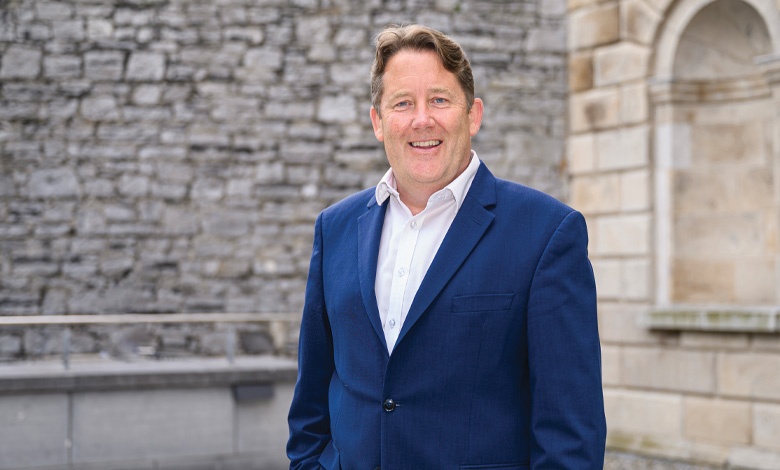

 Ossian Smyth TD
 Florika Fink-Hooijer
 Antoine Oger
 Laura Curtis-Moss
 Anthony Costello
 Niall Ó Donnchú
 Mike Savage
 Brian Carroll
 Oisín Coghlan
 Stephen Onakuse
 Kevin O’Sullivan
 Hendrik W van der Kamp
 Philip Nugent
 Adrian Smyth
 Ainhoa Gonzalez Del Campo
 Geoff Doole
 Clare Pillman
 David Greenfield
 Danielle Conaghan
 Peter McEvoy
 Triona McGrath
 J Owen Lewis
 Gavin Smith
 Imelda Hurley
 Lucy Gaffney
 Dr Venkatesh Kannan
 Kevin Hegarty
 Eimear Cotter
 Aditya Arora
 Patric Child
 Eleanor Roche
 Andy Bleasdale
 Andrew Muir MLA
 Chris Hewitt
 Francesca Racioppi
 Danielle Conaghan
 Christopher Hammond
 Laura Díaz Anadón
 Lorna McAdoo
 Conor Murphy
 Mark Horton
 Niall McLoughlin
 Susan Hegarty
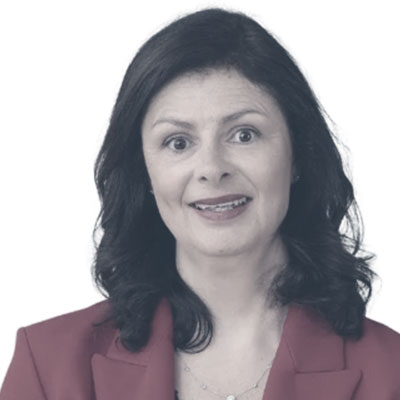 Zoe Kavanagh
 Niall Ó Donnchú
 Venkatesh Kannan
 David McGee
 Anna Rose
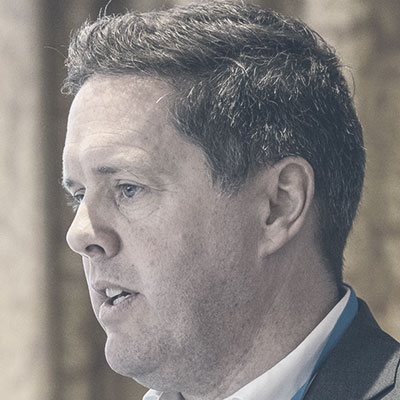 Paul Hogan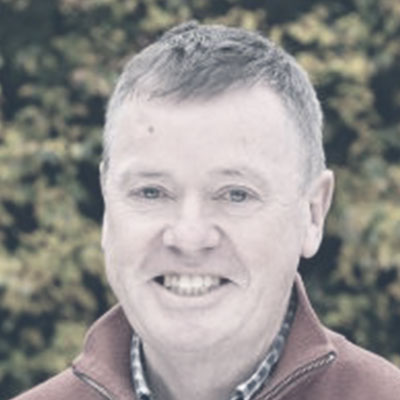
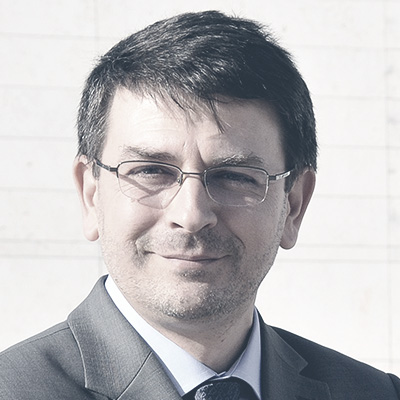


















 Levent Ergin
 Veronica Manfredi
 Francis Finnerty
  Timmy Dooley TD
  Julie Thompson
  Mark Thuillier
  Martin Hutchings
  Mark Nolan
  Ian Marnane
 Tom Pickerell
 Caroline Kuzemko
 Alex White
 Dr Lizzy Pinkerton
  Dr. Lisa McNamee
  Denise Cahill
 Claragh Mulhern
 Sophie Reynolds
 Eva Maria Bille
  Jacinta Conway
  Joe Duignan
 Maria Fitzpatrick
 Martina Hennessy
  Noel Meehan
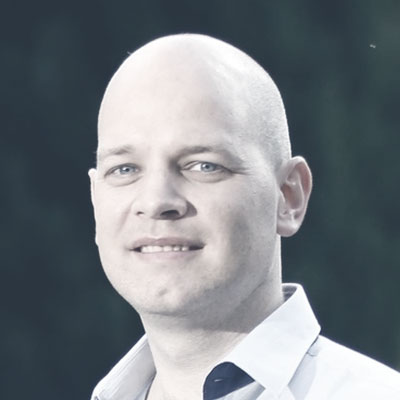 Enda Murphy
 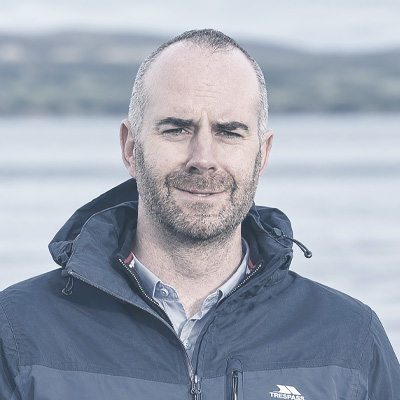 Barry O’Loughlin
 Paul O’Neill
 Irene Rondini
 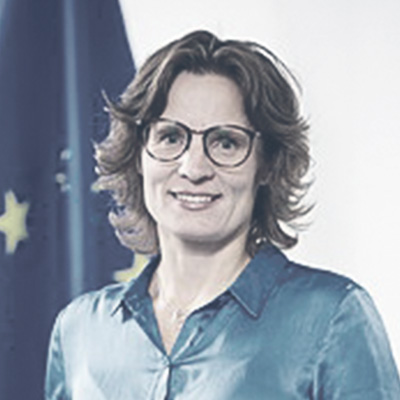 Jessika Roswall
 Fiona Simpson
 Anne Goggin
  Catherine Vilquin
 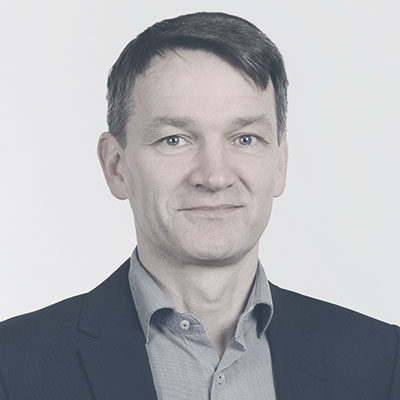 Conall Boland
 Colin O’Hehir
 Janet Lynch
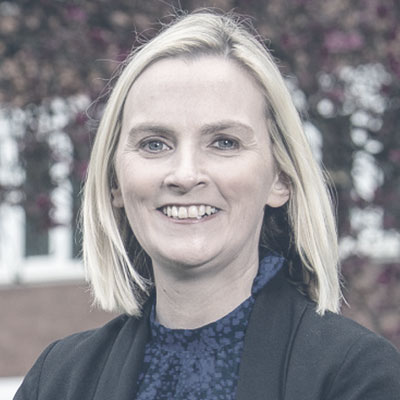 Sara Lynch
 Maria Kelly
 Deborah Spence
 Juan Pablo Martinez
 Valentina Tarasco