

Lynn Boylan MEP: Mercosur is a bad deal
31st October 2025
Integrated planning of climate neutral cities
16th November 2025
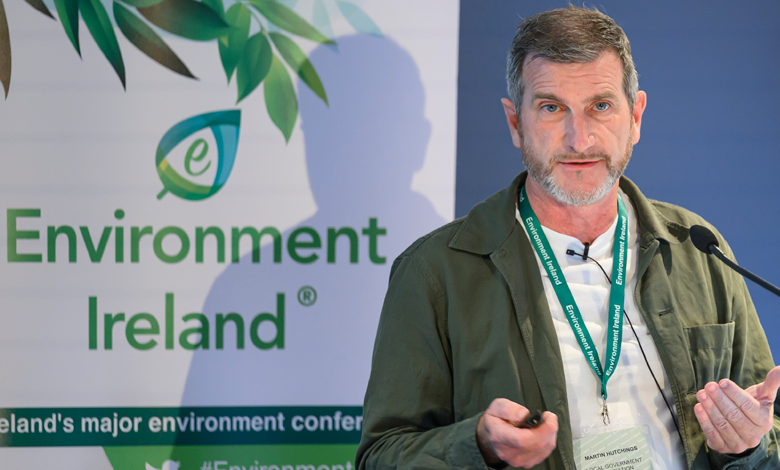
Martin Hutchings, principal adviser for performance and improvement at the UK Planning Advisory Service (PAS), discusses the role of local authority planners in achieving better environmental outcomes.
Hutchings begins by saying: “Local planning authorities on their own are not going to be able to deliver the environmental outcomes that the UK and the world needs.”
He identifies the creation of local plans as key to facilitating this and says their implementation is a key priority of the UK Government. However, less than half of local authorities in the UK have an up-to-date local plan.
The adviser indicates that this can give developers leverage to “argue out” conditions in a development’s plan, which may impede environmental outcomes. He states that the PAS is “really keen to support local authorities to get their local plans in place” to address this.
Legal change
Planners face new legal constraints such as the mandatory implementation of nutrient neutrality mitigation schemes in specific areas in England. This requirement was introduced to the English planning system following the ‘Dutch nitrogen case’.
In January 2025, the Hague District Court ruled that the Dutch Government was off-track for 2025 and 2030 nitrogen reduction targets and was failing to reduce nitrogen emissions in line with the EU Habitats Directive. The Dutch Government was ordered to meet its statutory target of reducing nitrogen below harmful thresholds in 50 per cent of the country’s most vulnerable habitats by 2030 or face a €10 million penalty.
Hutchings explains that awaiting the implementation of mandatory nutrient neutrality mitigation schemes is impeding the delivery of homes, adding: “We are still not there yet in some places to deliver those schemes.”
He explains that the Government aims to deliver 1.5 million homes during its tenure. This presents a question for planners: “How do you deliver all of that development while protecting the environment?”
Biodiversity net gain
The Environment Act 2021 stipulates that developments must achieve a 10 per cent biodiversity net gain (BNG). Hutchings states that this is ideally achieved on-site. Where this is not possible, developers can purchase biodiversity units from habitat banks. Failing this, developers can avail of biodiversity credits provided by the Government.
The adviser explains that this ensures that the net gain target does not prevent delivery of developments. However, he asserts that it presents challenges to local planning authorities and developers.
“Local planning authorities paly the main role in the approval process for setting up habitat banks. There is little regulation of the biodiversity bank market and local planning authorities are finding themselves acting a bit like a market regulator,” says Hutchings.
He continues: “Biodiversity net gain must be secured for 30 years; that is a legal agreement. It is a big change for planning. Legal agreements do not typically last that long. What sort of control does the local planning authority have over whether that is delivered?”
Another significant change for planning is that developers do not need to submit full details of how they plan to achieve the net gain target prior to approval of their application; albeit the development cannot proceed until a BNG plan detailing how they will deliver the gain is approved.
“Planners like to have everything sorted before the decision is made, but with BNG there is a lot of information they must be comfortable not knowing and work with developers to ensure a robust biodiversity gain plan is in place before development can start,” says the adviser.
Connection
Hutchings explains that the PAS acts as a connection between local and central government. This positions the organisation to understand the objectives and challenges of each.
“Local authorities do not like being told what to do by central government,” says Hutchings. “We understand what national government wants to achieve through the planning system, and we find a way to work with local government to deliver that on terms that balance their local priorities with those of the Government.”
“Our job is to try and help local authority planners take a balanced approach to making decisions that deliver on the environment while delivering the Government’s housing agenda.”
He explained that PAS assists local planning authority planners that must make balanced decisions that take account of the diverging needs and views of multiple stakeholders. This is achieved through training and support, self-serve toolkits, webinars, and the creation of templates that can standardise and simplify complicated documents like legal agreements.
The adviser also cites the organisation’s role in plugging the skills and experience gaps created by significant budget cuts over the past decade and the retirement of a significant number of planners, taking with them years of experience and knowledge. He says: “We are trying to build the funnel back up again starting with graduates and middle managers; giving them leadership skills to start plugging some of those gaps.”
Planning reforms
Hutching says numerous planning reforms are inbound, adding that they are aimed at expediting the current system. He continues: “There is a real danger that that push for speed is at the expense of environmental issues. Our job is to try and help local authority planners take a balanced approach to making decisions that deliver on the environment while delivering the Government’s housing agenda.”
The adviser also outlines how changes in England’s political climate may present further challenges to a planning system that delivers positive environmental outcomes.
“We are starting to see shifts in how some local councils approach climate issues; including decisions to step back from previously declared climate emergencies,” says Hutchings.
“PAS does involve itself with politics, but there are changing views at the local level that can influence how effectively planning supports environmental goals.”



 Ossian Smyth TD
 Florika Fink-Hooijer
 Antoine Oger
 Laura Curtis-Moss
 Anthony Costello
 Niall Ó Donnchú
 Mike Savage
 Brian Carroll
 Oisín Coghlan
 Stephen Onakuse
 Kevin O’Sullivan
 Hendrik W van der Kamp
 Philip Nugent
 Adrian Smyth
 Ainhoa Gonzalez Del Campo
 Geoff Doole
 Clare Pillman
 David Greenfield
 Danielle Conaghan
 Peter McEvoy
 Triona McGrath
 J Owen Lewis
 Gavin Smith
 Imelda Hurley
 Lucy Gaffney
 Dr Venkatesh Kannan
 Kevin Hegarty
 Eimear Cotter
 Aditya Arora
 Patric Child
 Eleanor Roche
 Andy Bleasdale
 Andrew Muir MLA
 Chris Hewitt
 Francesca Racioppi
 Danielle Conaghan
 Christopher Hammond
 Laura Díaz Anadón
 Lorna McAdoo
 Conor Murphy
 Mark Horton
 Niall McLoughlin
 Susan Hegarty
 Zoe Kavanagh
 Niall Ó Donnchú
 Venkatesh Kannan
 David McGee
 Anna Rose
 Paul Hogan






















 Levent Ergin
 Veronica Manfredi
 Francis Finnerty
  Timmy Dooley TD
  Julie Thompson
  Mark Thuillier
  Martin Hutchings
  Mark Nolan
  Ian Marnane
 Tom Pickerell
 Caroline Kuzemko
 Alex White
 Dr Lizzy Pinkerton
  Dr. Lisa McNamee
  Denise Cahill
 Claragh Mulhern
 Sophie Reynolds
 Eva Maria Bille
  Jacinta Conway
  Joe Duignan
 Maria Fitzpatrick
 Martina Hennessy
  Noel Meehan
 Enda Murphy
  Barry O’Loughlin
 Paul O’Neill
 Irene Rondini
  Jessika Roswall
 Fiona Simpson
 Anne Goggin
  Catherine Vilquin
  Conall Boland
 Colin O’Hehir
 Janet Lynch
 Sara Lynch
 Maria Kelly
 Deborah Spence
 Juan Pablo Martinez
 Valentina Tarasco